

For many first-time buyers across Kent and East Sussex, getting onto the property ladder feels like an uphill struggle. With rising monthly rents making it hard to save a deposit, the pressure to secure a home within budget can feel overwhelming. Simply escaping the rental trap quickly becomes the sole focus.
However, remember that monthly rent covers more than just a roof over your head. Rent includes all structural maintenance, roof repairs, and emergency callouts. As a homeowner, those unexpected capital costs fall squarely on your shoulders.
To avoid jumping straight out of the rental frying pan and into a financial fire, buyers must remain objective. It is easy to be led by the heart and an urgent desire to stop paying rent, but arranging an independent RICS Home Survey before exchanging contracts ensures your dream home doesn’t become an unmanageable financial burden.
Here is the ultimate objective checklist of physical, legal, and operational risks to evaluate before making an offer on a mid-century or post-war property.
Special First Time Buyer Offer: Free Sprift Property Report
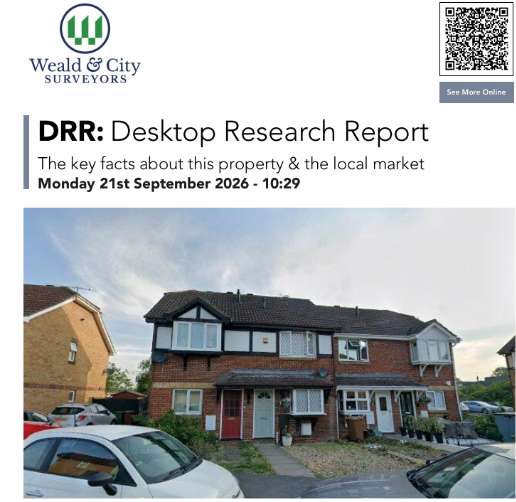
To help you get as much upfront information as possible before committing your hard-earned money to a survey or legal fees, Weald and City Surveyors Ltd offer first-time buyers a free full Sprift Property Report.
There is no cost or obligation. Simply call our office, mention that you are a first-time buyer, and give us the address of the property you are considering. We will generate and email your comprehensive report straight away.
What Is Included in Your Free Sprift Report?:
- Detailed Title and Boundary Plans: Clear map overlays showing the registered legal title boundaries and property footprint.
- Planning History and Local Authority Data: Complete historical record of local planning applications, decisions, and nearby development proposals.
- Flood Risk and Environmental Profiles: Comprehensive surface water, river, and groundwater flood risk assessments for the specific plot.
- Conservation and Listed Status Checks: Instant verification of conservation area boundaries, tree preservation orders, and listing statuses.
- EPC and Energy Performance Breakdown: Full historical energy rating data and structural construction indicators.
- Local School Catchments and Transport Links: Official Ofsted performance ratings for nearby primary and secondary schools, alongside local transport distance data.
Having this data before viewing or making an offer gives you a huge advantage, helping you spot potential red flags early and ask estate agents the right questions.
1. Understanding the Role of the Estate Agent
As a first-time buyer, you need to keep a clear head during viewings and negotiations.
- Whose Interest Do They Represent? The estate agent is legally and contractually bound to act in the seller’s best financial interests, as the seller pays their fee. Their primary objective is to achieve the highest possible price and secure an exchange of contracts as quickly as possible. They are not independent advisors to the buyer.
- Fairness Requirements and Consumer Standards: Estate agents must adhere to strict regulatory standards, such as the Consumer Protection from Unfair Trading Regulations and codes of practice from approved redress schemes like The Property Ombudsman. Under these rules, agents are prohibited from making false statements, misleading buyers by omission, or suppressing known material information about a property. They must treat all parties fairly and pass on all formal offers to the seller accurately.
- Protecting Yourself: While reputable estate agents act professionally and fairly, they cannot perform a technical building assessment for you. Never rely on verbal assurances or marketing material regarding a property’s physical condition. Always verify the structure using an independent, qualified surveyor who acts solely for you.
2. The Financial Reality: Bricks and Mortar Are No Longer a Guaranteed Investment
A common belief among first-time buyers is that buying property is an infallible way to grow wealth rapidly. Historically, bricks and mortar were viewed as an unbeatable asset class, but modern economic conditions mean housing should no longer be treated as a guaranteed, high-return investment.
When adjusting top-line house prices for inflation, property growth over the past decade has been surprisingly muted:
10 Year Reality Check: Nominal vs Real House Price Growth
- The Headline Figure: According to UK House Price Index and Nationwide data, the average UK house price rose from approximately £196,800 in 2016 to approximately £273,000 in 2026, which is a nominal gain of roughly 38 per cent.
- The Inflation Adjustment: Over that exact same 10-year period, cumulative CPI inflation reached roughly 40 per cent.
- The Bottom Line: In terms of real purchasing power, average UK house prices have slightly stagnated or fallen by 2 percent over the last decade. In recent years, while house price growth slowed, elevated inflation and interest rates effectively absorbed real term equity gains.
When you factor in stamp duty, mortgage interest, legal fees, and ongoing maintenance, treating residential property as a quick wealth generator is a high-risk approach. Buying a home should be about long-term stability, security, and personal comfort, not an assumption of guaranteed capital appreciation.
3. High Ticket Maintenance and Capital Outlays
In a rental property, a broken boiler or a leaking roof is the landlord’s responsibility. As a homeowner, these become immediate capital expenses. Several high-ticket items are frequently nearing the end of their operational lifespan in 1950s to 1980s housing stock:
- Ageing Boilers and Heating Systems: Replacing an obsolete boiler with a modern, high-efficiency combi system typically costs between £1,800 and £3,500 or more, depending on pipework adjustments.
- Fireplaces and Wood Burning Stoves: An open fire or stove is hugely appealing during viewings, but it is not a zero-effort feature. You do not just throw the wood in and sit back with a glass of wine! Running a real fire involves ongoing fuel costs, annual chimney sweeping (typically £60 to £100 or more), periodic safety inspections, and potential relining with a flexible stainless steel flue liner (£900 to £1,800 or more) if the flue is degraded or leaks smoke into subfloor or roof spaces.
- Flat Roof Extensions and Dormers: Mineral felt flat roofs on mid-century dormers or rear extensions have a typical lifespan of 15 to 20 years. Full replacement using modern EPDM rubber or GRP fibreglass ranges from £1,500 to £4,000 or more.
- Redundant and Shared Chimney Stacks: Unmaintained chimneys are prime sources of water ingress, structural masonry cracking, and dampness. On semi-detached or terraced properties, chimney stacks and flashings are often shared liabilities requiring joint agreement, scaffolding, and specialist care.
- Leasehold Service Charges and Reserve Funds: For maisonettes or flats, always scrutinise leasehold terms. Unexpected maintenance assessments, rising service charges, or low sinking funds can instantly inflate your monthly outgoings beyond what you were paying in rent.
4. Electrical Safety and Mandatory System Upgrades
First-time buyers should always budget for a thorough Electrical Installation Condition Report carried out by a registered electrician, as mid-century wiring rarely meets current safety standards.
- Non-Combustible Metal Consumer Units: Amendment 3 of BS 7671 requires metal consumer units in domestic premises to contain fire outbreaks within the enclosure. Government building fire data attributes around 14,000 to 15,000 domestic dwelling fires per year in England to electrical distribution and appliances.
- Residual Current Devices: Standard 30mA RCD protection cuts power rapidly during earth faults. Electrical safety bodies highlight that RCDs prevent up to 90 percent of severe electric shocks and significantly reduce fire risks caused by electrical tracking.
- Surge Protection Devices: SPDs safeguard sensitive electronics and consumer unit circuitry against transient overvoltage surges, such as lightning strikes or grid switching, which prevents costly equipment damage and thermal failure.
5. Legal Boundaries, Drainage and Shared Liabilities
Understanding where your legal responsibility ends, and where your neighbour’s begins, is essential to avoid future disputes and unexpected repair bills:
- Below Ground Drainage Responsibilities and CCTV Surveys: Establish early whether foul and surface water drains are private or adopted by the local water company, such as Southern Water. On mid-century housing, shared private runs, unmapped soakaways, or degrading pitch fibre pipework can leave you personally liable for expensive unblocking or replacement works.
- Negotiation Tip: If a property has a reasonable length of private drainage before connecting to the public main, commissioning a specialist CCTV drain survey (typically £150 to £350) before exchange is highly recommended. Identifying hidden defects, such as root ingress, collapsed sections, or severe pitch fibre deformation, early allows you to quantify high-cost repair estimates (£1,000 to £3,000 or more) and negotiate a price reduction or seller concession prior to exchange.
- Shared Rainwater Goods: On terraced or semi-detached homes, shared gutters and downpipes are common failure points. A leaking gutter on a neighbouring property can easily cause penetrating dampness on your side of the party wall.
- Parking and Vehicle Access: Never assume off-street parking rights. Check legal deeds for allocated spaces, shared access driveways, drop kerb permissions, and local on-street parking restrictions during peak hours.
6. Outdoor Maintenance: Trees, Gardens, Fencing and Outbuildings
A generous garden or mature plot adds significant appeal, but outdoor ongoing commitments are frequently underestimated when transitioning from renting:
- Professional Tree Care and Risk Management: Mature or oversized trees close to boundaries or structures require ongoing professional maintenance. Crown lifting, pollarding, or removing unsafe limbs requires specialist arboricultural work, which can easily cost £500 to £1,500 or more per visit. Tree roots can also undermine shallow foundations on clay soils or block private drainage runs.
- Fencing Boundaries and Shared Enclosures: Inspect boundary timber fencing carefully. Replacing standard lap panels or gravel boards across an average garden boundary easily reaches £1,200 to £3,000 or more. Always confirm boundary ownership in the legal deeds to know which side you are legally responsible for maintaining.
- Outbuildings, Sheds and Garages: Outbuildings often suffer from neglected roofs, rotting timber frames, or asbestos cement cladding or roofing sheets. Repairing weatherproofing or safely disposing of hazardous outbuilding roofing can become an immediate, unexpected expenditure after moving in.
- Time and Tool Commitments: Maintaining lawns, hedging, retaining walls, and paved patios requires ongoing financial outlay and physical time. Factor in the cost of lawnmowers, hedge trimmers, power washing, and regular timber treatments.
7. Environmental Hazards, Material Risks and Sloping Ground
Post war construction techniques introduced materials and structural methods that require careful inspection today, particularly when combined with local topography:
- Properties Built on Sloping Ground: Steeply sloping sites demand extra scrutiny. Inspect retaining walls for bowing or inadequate weep holes, watch for surface water run off accumulating against rear masonry, and ensure sub floor voids on stepped foundations are correctly ventilated and dry.
- Surface Water Flooding: Even if a property is clear of rivers, localised surface water flooding from heavy rainfall and poor subsoil drainage is increasingly common. Check site contours and flood risks using the UK Government Long Term Flood Risk Checker.
- Asbestos Containing Materials: Widespread in 1950s to 1980s homes, asbestos is commonly found in textured ceiling coatings, floor tiles, soffit boards, and flue pipes. While safe if undisturbed, removal requires licensed specialists before any renovation work begins.
- Vulnerable Mild Steel Cavity Wall Ties: Original wire wall ties used in post-war cavity walls corrode and expand over time, leading to horizontal mortar cracking and outer leaf instability. Remedial stainless-steel ties are essential to preserve wall integrity.
8. Energy Efficiency, EPC Limitations and True Costs
An Energy Performance Certificate is a useful baseline, but buyers must treat its figures with caution:
Buyer Warning: Fuel Costs and Works Scope
- Optimistic Fuel Costs: Real-world feedback consistently indicates that estimated fuel costs on EPC registers are overly optimistic, as standard algorithms assume idealised heating patterns and occupant behaviour.
- Inaccurate Improvement Cost Estimates: EPC software generates automated cost estimates that fail to account for the true, real-world scope of works. For instance, an EPC might recommend installing solar PV panels for a few thousand pounds, but entirely ignores essential prerequisites, such as repairing, re-covering, or structurally reinforcing an aging roof to safely carry the load. Always seek professional quotes rather than relying on EPC figures.
9. Room to Grow: Avoiding the Too Small Trap
Moving house is exceptionally expensive once you factor in stamp duty, legal fees, estate agent commissions, and removal costs.
While a first home is rarely a home for life, buying a property that is too small simply to get out of rental accommodation forces an early, expensive secondary move. Ensure the property has:
- Practical storage solutions for day-to-day living.
- A layout that offers a reasonable period of enjoyable, comfortable occupation.
- Realistic space or Permitted Development potential to extend into the rear garden or loft space in the future.
10. Area Due Diligence and Essential Service Checks
A house can be renovated, but its location cannot. Before committing, conduct thorough background checks beyond a quick daytime viewing:
- Safety and Crime Rates: Check local crime statistics, visual street maps, and breakdown trends using the Police.uk Interactive Crime Map.
- Noise and Pollution: Visit the street at peak commuting hours, late evenings, and weekends to gauge traffic volume, commercial noise, or aircraft flight paths.
- Connectivity and Utilities: Verify actual broadband speeds via Ofcom’s Broadband and Mobile Checker, which is essential for remote working, and test indoor mobile signal strength.
- Local Essential Services: Check the immediate availability and capacity of local GP surgeries, dental practices, and primary or secondary schools. High local demand can make registering far more difficult than anticipated.
Claim Your Free Sprift Report & Protect Your Investment
Navigating the transition from tenant to homeowner requires clear facts and objective advice. Spotting physical, structural, legal, and environmental factors early prevents expensive surprises down the road. An independent RICS Building Survey provides an unhurried, meticulous assessment of the property’s health, giving you the facts needed to negotiate confidently or plan your long term maintenance budget.
Buying your first home in Kent or East Sussex?
Call Weald and City Surveyors Ltd on 01580 712460 to request your free Sprift Property Report or email info@wealdandcity.co.uk for clear, independent advice and a free survey quote.

Article by Timothy Hicks BSc (Hons), PGDip Building Surveying, MCIOB, AssocRICS